You Feel Like You Know Them — But Do You? The Truth About Fans and Celebrities Online
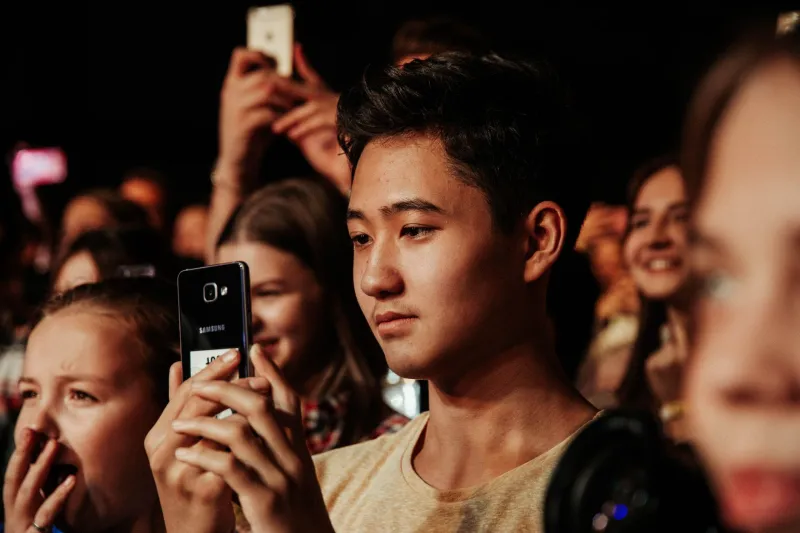
Scroll through your TikTok FYP on any given Tuesday and you'll probably find at least one celebrity looking directly into the camera, speaking in hushed, confessional tones about something deeply personal — a breakup, a mental health struggle, a vulnerable moment they're "sharing" with their community. It feels intimate. It feels real. And that's exactly the point.
Welcome to the age of the parasocial relationship, where the line between genuine human connection and highly engineered fan engagement has never been blurrier. Let's talk about what's actually going on — and why it matters more than most people want to admit.
What Even Is a Parasocial Relationship?
The term sounds clinical, but the experience is anything but. A parasocial relationship is essentially a one-sided emotional bond where one person — the fan — invests real feelings, time, and emotional energy into someone who doesn't know they exist. Psychologists identified the phenomenon back in the 1950s, but social media didn't just accelerate it. It supercharged it into something the original researchers couldn't have imagined.
When a celebrity responds to a fan's comment, posts a "no makeup" selfie at 2 a.m., or goes live on Instagram while crying, the brain processes it the same way it would a real friendship. Neurologically, it barely registers the difference. That's not a weakness or a character flaw in fans — it's literally how human connection works. The issue is that some celebrities (and their teams) know this, and they use it.
The Authenticity Industrial Complex
Here's the uncomfortable truth: in 2024, "being real" is a brand strategy. The carefully disheveled TikTok filmed in a car. The Instagram Story that's "accidentally" too personal. The Twitter reply to a random fan account that goes viral because it seems so spontaneous. A lot of this is constructed with the same precision as a Super Bowl ad — it just doesn't look like it.
Taylor Swift is probably the most studied case in this space. Her fan engagement strategy — Easter eggs, cryptic social media clues, surprise appearances at fan events — has built what might be the most devoted fan army in modern pop history. Swifties don't just buy albums; they decode them, defend them, and organize around them with a level of commitment that borders on the communal. Is Swift's connection to her fans genuine? Almost certainly, to some degree. But is it also a meticulously maintained marketing ecosystem? Absolutely yes — and both things can be true simultaneously.
That's the real complexity here. Authenticity and strategy aren't mutually exclusive. The question is where one ends and the other begins.
Case Studies: Who's Actually Showing Up?
Not every celebrity-fan dynamic is a calculated performance. Some genuinely stand out for what feels like real, sustained community investment.
Lizzo built her platform on radical body positivity and consistent, enthusiastic engagement with fans long before she was a household name. Her early social media presence felt like someone genuinely thrilled to be connecting with people who got it — and that energy carried through as her fame scaled. Even amid controversy in recent years, the foundation of her fan relationship was clearly built on something more than optics.
Keanu Reeves operates in a completely different way — he's notoriously private and not particularly active on social media — yet he has one of the most genuinely adored fan relationships in Hollywood. Why? Because his reputation is built on consistent, documented behavior in real life: taking pay cuts so productions could afford better cast members, sitting on the floor of a subway, stopping to help stranded motorists. His "connection" to fans isn't manufactured through content — it's earned through a public track record of just being a decent human.
Contrast that with celebrities who clearly treat fan interaction as a transactional content strategy — the ones who go quiet for months and then suddenly flood their feeds whenever an album, film, or product launch is imminent. Fans notice. They always notice.
What Are Fans Actually Looking For?
This is where it gets genuinely interesting. Research into parasocial relationships consistently finds that what fans are seeking isn't really the celebrity — it's the feeling of being seen. Of belonging to something. Of having a shared cultural touchstone that connects them to other people.
BTS and the ARMY are a perfect example. The fandom isn't just about the music (though the music is clearly central). It's a global community with its own culture, language, and sense of identity. The members of BTS have cultivated that through years of genuine-seeming engagement — learning fan names, referencing specific fan interactions in interviews, creating content that acknowledges the community as a living thing. Whether every piece of that is entirely organic doesn't really matter to most fans, because the feeling of reciprocity is real even when the relationship is structurally one-sided.
The Dark Side Nobody Wants to Talk About
Parasocial relationships can go sideways fast. When fans invest deeply in a celebrity's curated persona and that persona cracks — a scandal, a contradiction, a moment that shatters the illusion — the emotional fallout can be genuinely painful. We've seen it play out publicly with fandoms that turn on celebrities overnight, not because the celebrity did something objectively catastrophic, but because the betrayal feels personal in a way that's hard to articulate to someone outside the fandom.
There's also the question of what intense parasocial investment does to fans themselves. When a significant chunk of your emotional life is organized around someone who doesn't know you exist, it can crowd out the messy, reciprocal work of real human relationships. That's not a judgment — it's just something worth sitting with.
So, Where Does That Leave Us?
Honestly? In complicated, fascinating territory that's still being mapped in real time. Social media has genuinely democratized access to celebrities in ways that feel meaningful. And some celebrities really are using that access to build something that looks a lot like community.
But the next time a celebrity posts something that makes you feel like they're talking directly to you — take a beat. Appreciate the feeling. Enjoy the content. And maybe also remember that somewhere, a very talented social media manager might have had a hand in crafting that moment of apparent spontaneity.
That doesn't make it worthless. It just makes it human.