Follower Counts as Weapons: Inside the Cutthroat Social Media Chess Game Celebrities Play
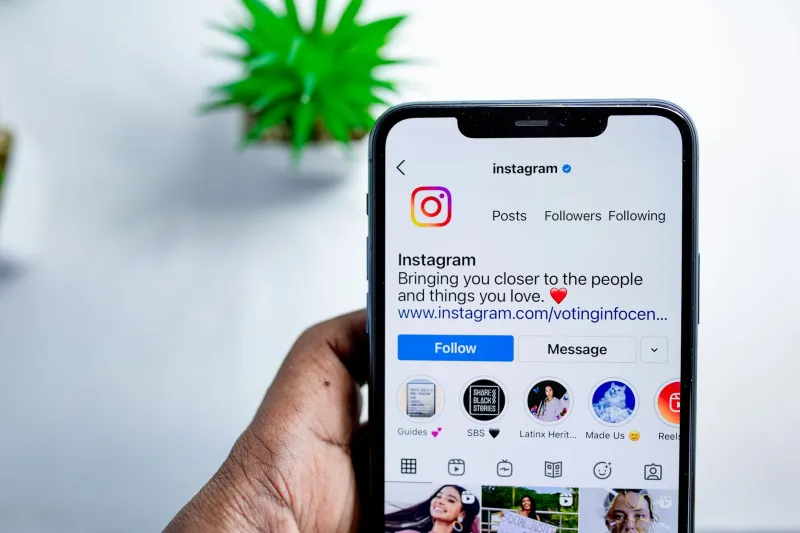
Once upon a time, celebrity beef played out through tabloid exclusives, pointed award show snubs, and the occasional very thinly veiled song lyric. Those days feel almost quaint now. In 2024, the most devastating move a celebrity can make against a rival isn't a diss track — it's a quiet, calculated unfollow at 2 a.m. on a Tuesday. Welcome to the unfollow economy, where follower counts are currency and every platform metric is a potential weapon.
This isn't petty stuff, either. When you're talking about people with tens of millions of followers, a single public unfollow sends a shockwave through fan communities, generates headlines, and — perhaps most importantly — signals to the entire industry exactly where you stand. No press release required.
The Anatomy of a Strategic Unfollow
Let's be real: celebrities don't accidentally unfollow people. Not at their level. Every account they follow is managed, monitored, and in many cases curated by a team of publicists and social media managers who understand exactly what those numbers communicate to the public. So when a high-profile name quietly drops someone from their following list, it's rarely an accident. It's a statement.
Think about the mechanics of it. A celebrity unfollow gets noticed almost immediately because fans — and we mean this in the most devoted, almost forensic sense — are constantly auditing these accounts. There are entire Reddit threads, Twitter/X accounts, and Discord servers dedicated to tracking exactly who follows whom in celebrity circles. The moment a number ticks down, the internet mobilizes. Screenshots get taken, timelines get reconstructed, and theories start flying within the hour.
That's an enormous amount of free press generated by the click of a button. And celebrities know it.
Case Studies in Platform Power Moves
Some of the most memorable social media chess moves in recent celebrity culture have come down to exactly this kind of metric manipulation. During the long-running Kardashian-Jenner drama cycles, fans have obsessively tracked follow and unfollow patterns among family members and their extended social circles as a real-time soap opera. When Jordyn Woods found herself at the center of the Tristan Thompson scandal back in 2019, the cascade of unfollows from the Kardashian-Jenner accounts wasn't just personal — it was a public excommunication broadcast to hundreds of millions of followers simultaneously.
That's not grief playing out privately. That's a coordinated messaging strategy delivered through platform behavior.
Or consider the Taylor Swift universe, where fan armies treat every follow, like, and comment from their favorite artists as sacred data points. When artists in Swift's orbit have had falling-outs — and there have been several notable ones — the unfollow receipts circulate faster than any official statement ever could. In some cases, the unfollow is the official statement. No publicist quote needed.
Even in the rap world, where beef traditionally gets aired through music, social media metrics have become part of the arsenal. Artists have been caught mass-muting collaborators mid-feud, removing tagged posts, and quietly scrubbing mentions — all moves that fans clock immediately and interpret as escalation.
Muting: The Passive-Aggressive Power Move Nobody Talks About Enough
If the unfollow is a public execution, the mute is a slow poison. Muting someone means you still technically follow them — the optics look fine from the outside — but you've essentially erased them from your digital world. It's the social media equivalent of nodding politely at someone you can't stand at a party while mentally checking out of the conversation entirely.
For celebrities navigating messy professional relationships, the mute is incredibly useful. You can maintain the appearance of civility while completely disengaging. And here's the truly wild part: when the mute eventually gets discovered — and it does get discovered, because fans will literally test engagement patterns to figure this out — it reads as worse than a straightforward unfollow. It suggests a deliberate performance of normalcy that masks real animosity. That's a whole different level of cold.
What the Numbers Actually Reveal About Celebrity Ego and Hierarchy
Beyond the drama itself, the unfollow economy exposes something fascinating about how celebrity hierarchy actually functions in the social media age. Follower counts have replaced a lot of traditional industry gatekeeping. You don't need a record label cosign or a magazine cover to establish your relevance anymore — your numbers do that for you. Which means those numbers carry genuine ego weight.
When a bigger celebrity refuses to follow back a smaller one, or when a legacy act doesn't acknowledge a newer artist on social media, those absences get read as status signals. It's a digital version of the old Hollywood pecking order, just played out in public and tracked obsessively by millions of fans who have strong opinions about who deserves recognition from whom.
There's also a fascinating power dynamic at play when celebrities with vastly different follower counts engage in these platform wars. A mega-star with 200 million followers unfollowing someone with 5 million carries a very different cultural weight than two artists with comparable audiences going at it. The asymmetry matters. It amplifies the statement.
The Fan Army Factor
None of this works without the fans, and celebrities absolutely know that. When a high-profile unfollow drops, the fan response is part of the strategy. Armies of devoted followers will immediately flood the unfollowed party's comments, launch harassment campaigns, or — depending on which side they're on — defensively explain away the drama. Either way, the engagement spikes. The algorithm rewards it. The celebrity who initiated the move gets visibility without saying a single word.
It's a remarkably efficient system, when you think about it cynically. Use your platform's mechanics to send a message, let your fanbase amplify it, and maintain total deniability because technically you didn't say anything. You just quietly adjusted your following list.
Is This Actually New, or Just More Visible?
Here's a question worth sitting with: have celebrities always been this calculating about their public relationships, and social media just made it visible? Almost certainly yes. The difference is that previously, these power dynamics played out in greenrooms, on red carpets, and in industry circles that most fans never had access to. Now the data is public, the fans are watching in real time, and the platforms themselves are essentially scorecards.
What social media did wasn't create celebrity ego games — it democratized the observation of them. And once fans realized they could track these dynamics themselves, the whole ecosystem shifted. Celebrities adapted. Now the platform behavior is the PR strategy.
The unfollow economy isn't going anywhere. If anything, as new platforms emerge and follower metrics evolve, expect celebrities to find even more creative ways to use their digital footprint as a weapon, a shield, or both. In the meantime, somewhere right now, a fan account is refreshing a celebrity's following list waiting for the next move in a chess game the rest of us are just watching unfold.